Cavity in Aglaophyton sporangium wall
Deutsche Version
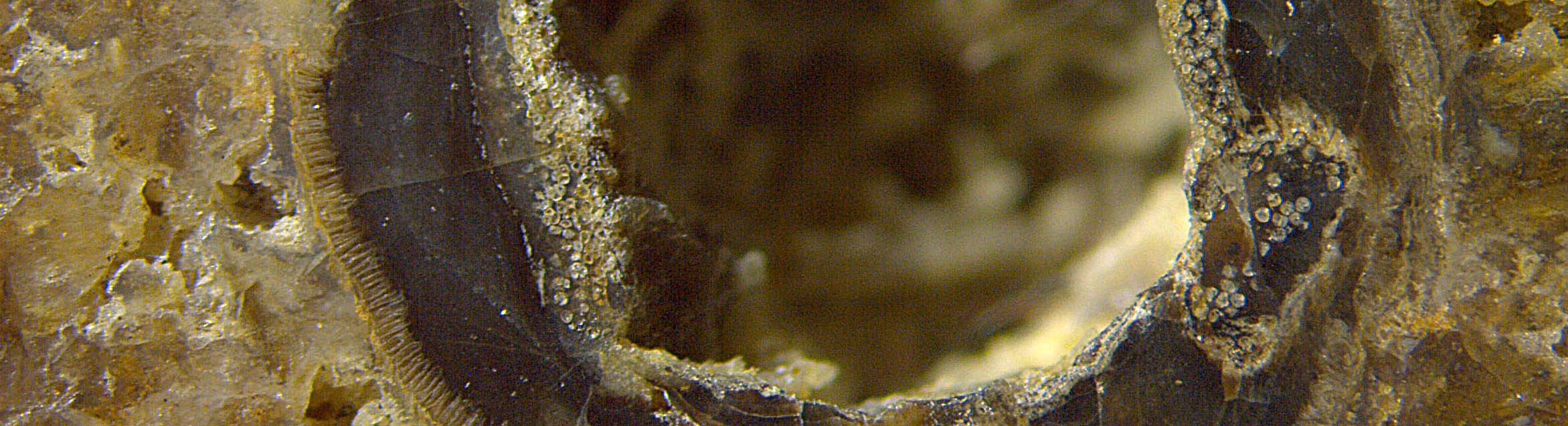
Erstes BILD - cavity

Image width 8 mm     Sample Rh2/98.1     obtained from SHANKS in 2003.
Since there seems to be "no convincing evidence at present for arthropod-mediated herbivory in the Rhynie ecosystem" [1], any one of several holes or cavities seen in recently found fossil plants in Rhynie chert should be noticed. This cross-section of a sporangium, outer diameter 6mm, offers es-sential details: The outermost wall of 0.2mm thickness, known as "palisade wall", is clearly seen on the left but largely decayed on the right. Most remarkable is the cavity eaten into the dark inner wall of 0.6mm thickness with remains of sporogenic tissue (?) and spores on the inside of the hollow sporangium.

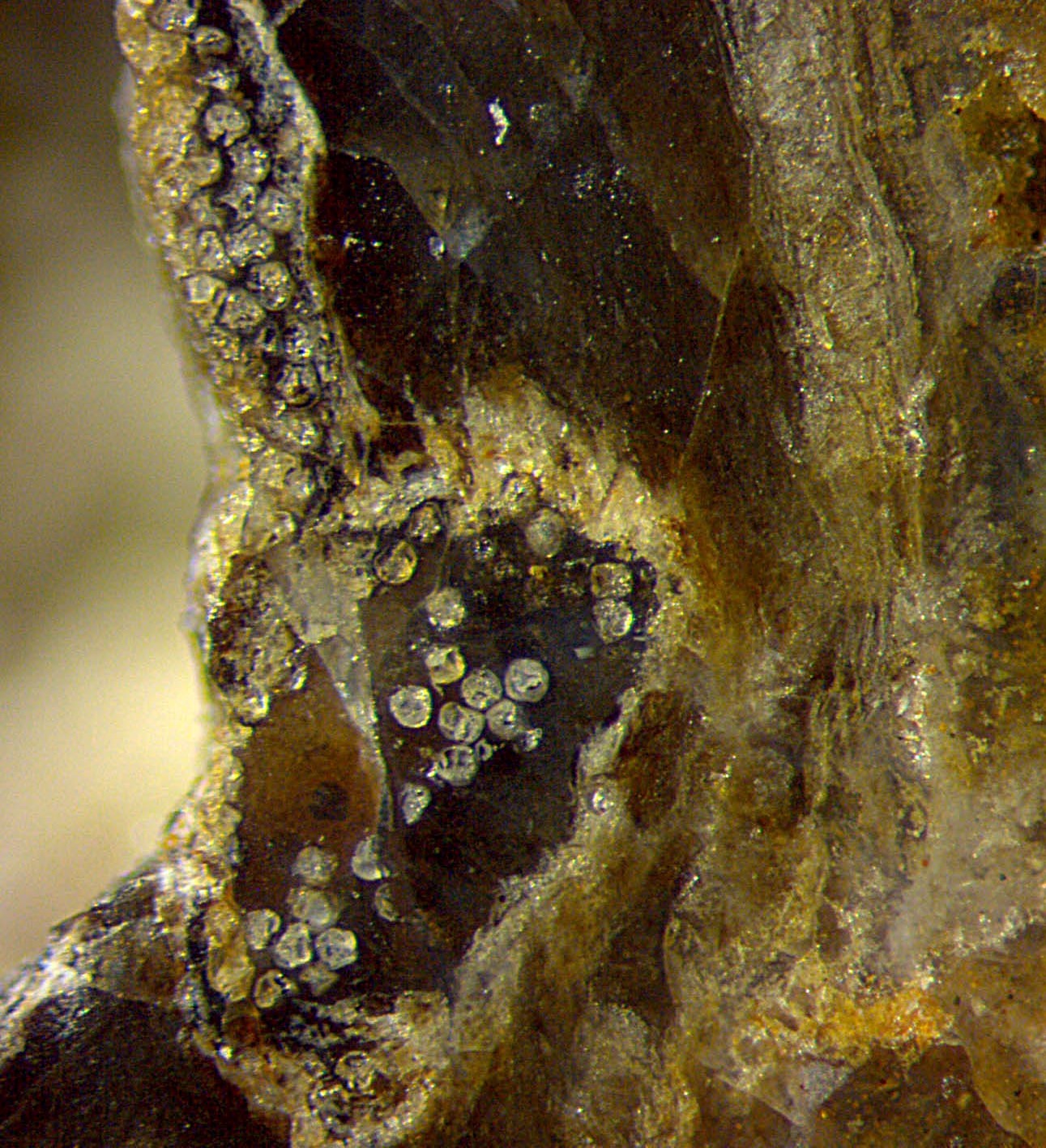
ZWEITES BILD - cavity zoomed in
The cavity in the dark inner wall does not look like a spore eater´s access hole into the sporangium. It rather looks like the result of deliberate gnawing by some herbivorous creature which had entered the sporangium through a hole in the outer wall, not seen here, with the aim to eat the tissue of the inner wall or sporogenic tissue with immature spores. This might be evidence for herbivory in the Lower Devonian habitat of Rhynie. Apparently, loose spore tetrads had got into the water-filled cavity before silicification had turned everything into chert.


H.-J. Weiss 2026

[1] J. A. Dunlop, R. J. Garwood (2017): Terrestrial invertebrates in the Rhynie chert ecosystem.
Philosophical Transactions of the Royal Society B: Biological Sciences 373.

193

Site map
Rhynie Chert News
pdf
for printing
Rhynie chert
